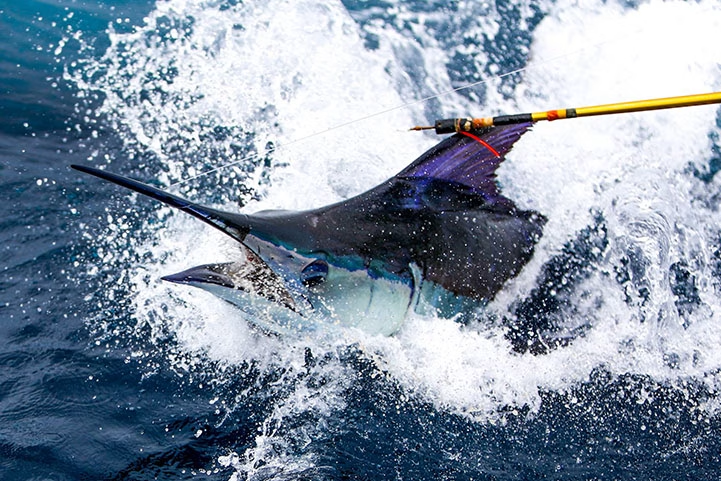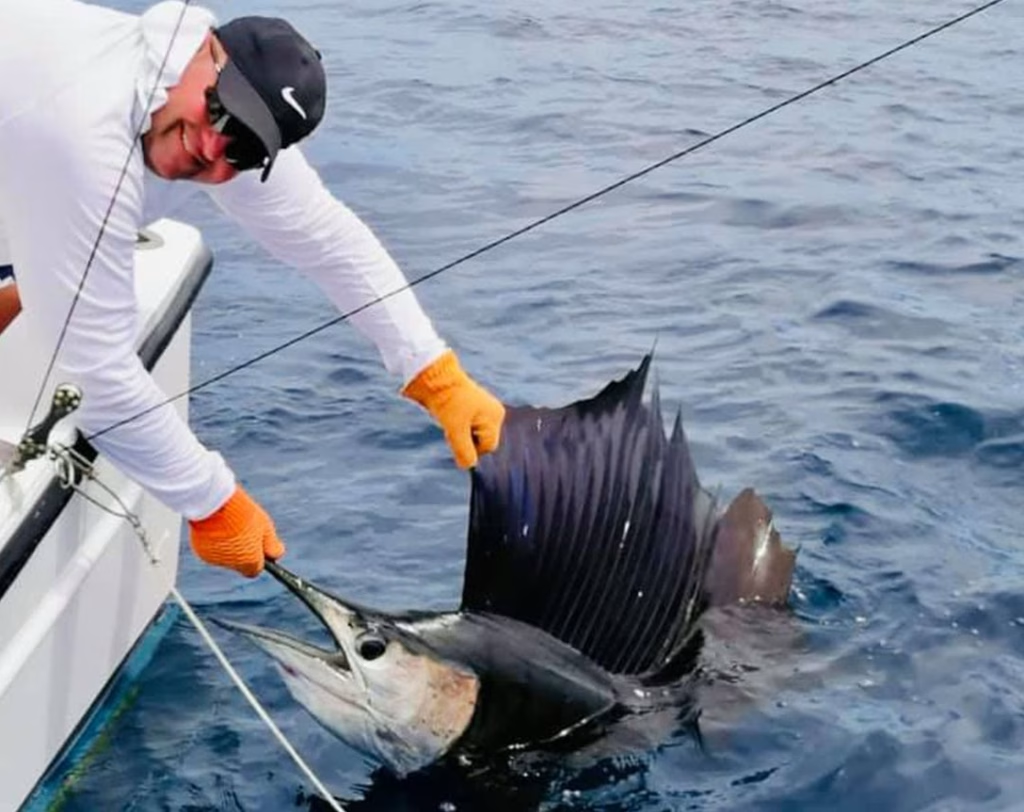
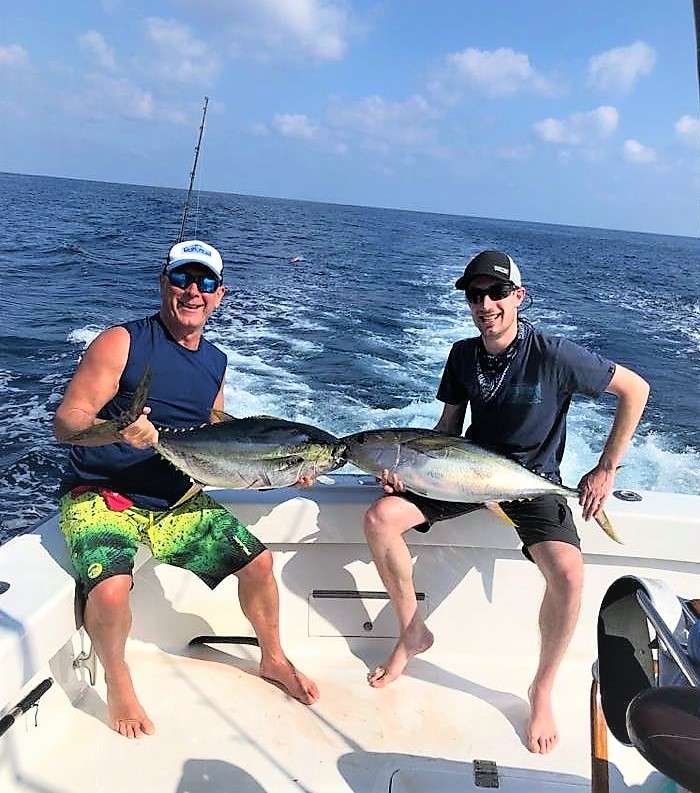
Yellowfin tuna are one of the hardest-fighting and most sought-after gamefish in Costa Rica. Known for explosive surface strikes, blistering runs, and incredible strength, yellowfin tuna deliver the kind of action that keeps anglers coming back year after year. From the warm waters of the central Pacific to the remote offshore banks of the Southern Zone, Costa Rica is one of the best tuna fishing destinations in the world.
Whether you want to chase giant 100 to 200-pound yellowfin or prefer non-stop action on school-sized fish for fresh sashimi on the boat, Costa Rica offers consistent opportunities throughout the year. Tuna are found offshore, around bait balls, beneath spinner dolphins, and near current edges where warm water meets nutrient-rich upwellings.
If you want one of the most exciting offshore experiences Costa Rica has to offer, yellowfin tuna fishing should be at the top of your list.
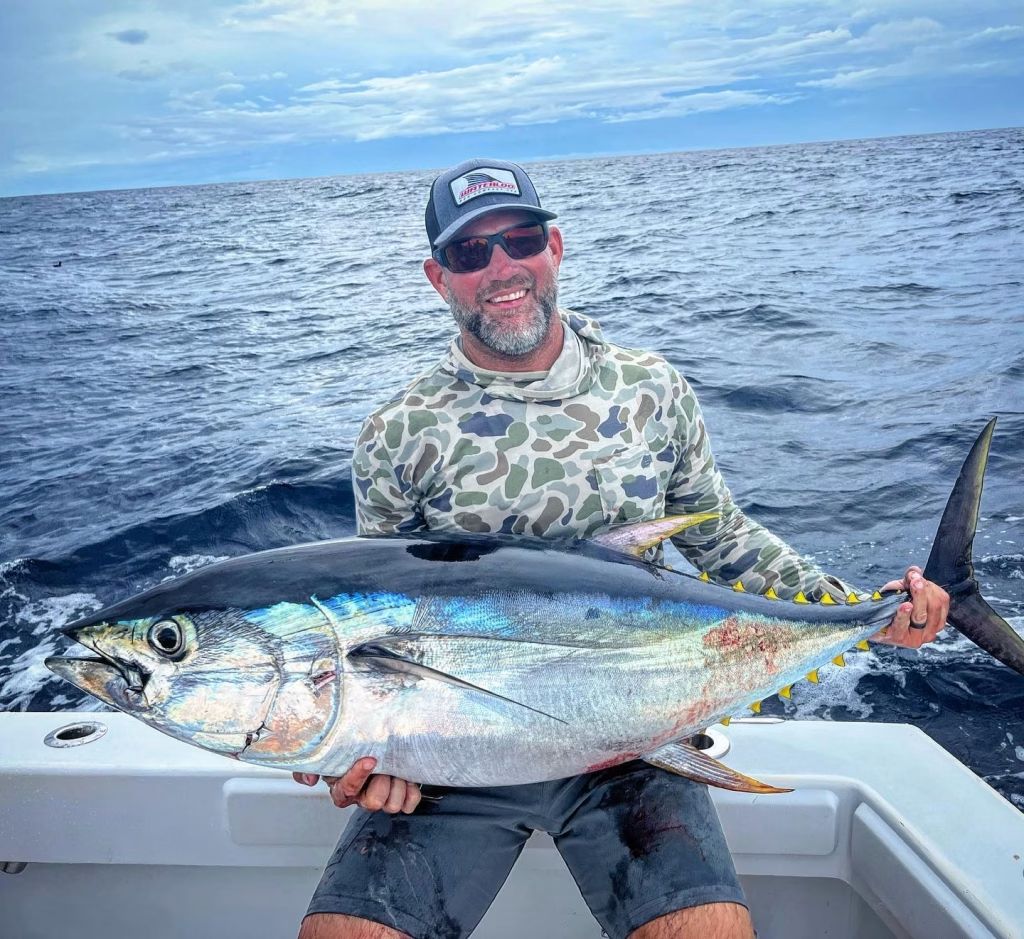
Why Yellowfin Tuna Thrive in Costa Rica
Costa Rica’s Pacific coastline sits at the center of a natural marine highway. Strong currents, warm tropical temperatures, and abundant bait create ideal conditions for large schools of yellowfin tuna. Deep water sits close to shore, and the coastline between Los Sueños, Quepos, and the Osa Peninsula is one of the most productive tuna regions in the Eastern Pacific.
Key reasons why tuna are so abundant here include:
Rich Bait Supply
Large schools of sardines, goggle-eye, bonito, squid, and flying fish attract consistent tuna activity. When the bait is thick, the tuna are close behind.
Spinner Dolphin Schools
Costa Rica is famous for its spinner dolphin pods, which often travel alongside large numbers of yellowfin tuna. Finding the dolphins often means finding tuna.
Stable Water Temperatures
Yellowfin prefer warm water between 74 and 82 degrees. Costa Rica maintains ideal temperatures nearly all year.
Deep Offshore Structure
The continental shelf drops quickly in the central and southern Pacific zones. This allows tuna schools to move along underwater ledges and current lines with ease.
Minimal Commercial Pressure
Costa Rica has strict laws that reduce heavy commercial tuna pressure nearshore. This helps keep stocks healthy and supports strong recreational fishing.
Combine these factors with highly skilled captains and modern boats, and you get one of the most reliable tuna fisheries anywhere in the Pacific.
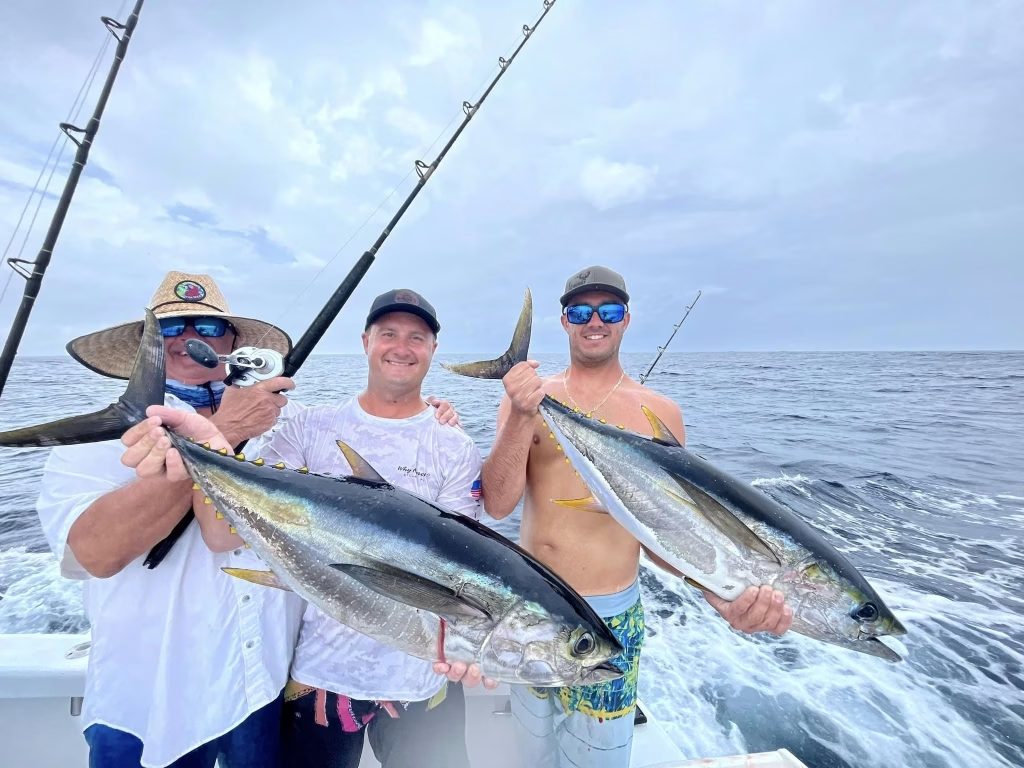
Best Time to Catch Yellowfin Tuna in Costa Rica
One of the biggest advantages of tuna fishing in Costa Rica is that yellowfin are available all year. While some seasons offer stronger numbers or larger size classes, there is no true off-season for tuna.
Peak Tuna Season
May through September produce the largest and most consistent concentrations of yellowfin. During these months, offshore crews regularly find giant tuna breaking the surface near dolphin pods or around bait balls. This is also the time when the biggest fish show up, including 150 to 200-pound trophy-grade yellowfin.
Shoulder Season
January through April still offers excellent tuna fishing. Although the largest fish are less frequent, the action can be fast and consistent, especially south of Los Sueños and around Quepos. Schools of 20 to 70-pound tuna are common, and calm, dry season seas make this time very enjoyable for anglers.
Green Season
October and November can vary depending on the weather, but experienced captains often find concentrated tuna far offshore when conditions are stable. This period also sees mixed offshore action with dorado, sailfish, and marlin.
Year-Round Action
If your goal is simply to catch tuna, Costa Rica is one of the most dependable destinations in the world. There is never a bad month to target them.
Best Regions in Costa Rica for Tuna Fishing
Yellowfin tuna are found throughout the Pacific coast, but some areas stand out for size, numbers, and consistency.
Los Sueños and Jaco
The central Pacific near Los Sueños offers quick access to deep water and strong currents. Captain crews here specialize in finding dolphin pods where tuna are feeding aggressively. This is one of the most reliable areas for both giant tuna and non-stop action on school fish.
Quepos and Manuel Antonio
Home to Marina Pez Vela, Quepos is another tuna hotspot. Yellowfin travel in large schools here, especially from May to September. Expect fast action, opportunities for live bait fishing, and high chances of mixing in sailfish, marlin, and mahi mahi.
Flamingo, Tamarindo, and Guanacaste
Northern Costa Rica sees excellent tuna fishing during the green season. When winds settle and bait moves into the region, big tuna arrive quickly. These waters are especially good for anglers staying in the beach towns of Tamarindo, Conchal, or Potrero.
Golfito and the Osa Peninsula
The southern zone is one of the most untouched tuna fisheries in Costa Rica. With deep water close to shore and minimal pressure, anglers regularly encounter huge schools of yellowfin with fish well over 100 pounds. This region offers consistent action throughout the year.
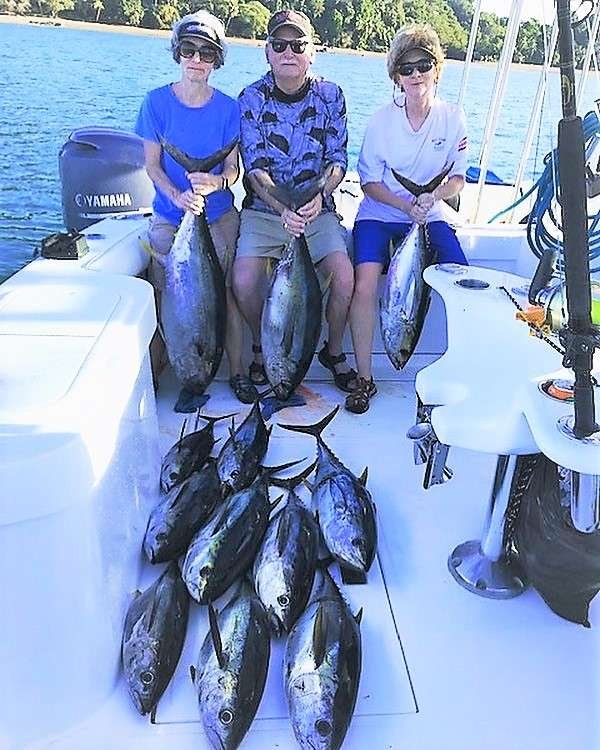
How Yellowfin Tuna Are Caught in Costa Rica
Costa Rican crews use a variety of techniques depending on conditions, water clarity, and the size of the tuna in the area. Yellowfin are aggressive feeders, but an effective strategy is key to hooking the big ones.
Running with Spinner Dolphins
This is the most famous method in Costa Rica. Tuna often travel beneath pods of spinner dolphins, feeding on the same bait schools. When boats locate dolphins, they stay nearby and place lines around the edges of the pod. Tuna frequently strike lures or baits just outside the dolphin school.
Popper Casting
Topwater popper fishing for tuna is one of the most exciting offshore experiences. When tuna are busting bait near the surface, anglers cast large poppers and retrieve fast to trigger explosive surface strikes.
Jigging
Vertical jigging is highly effective when tuna are deep under bait balls. Heavy jigs create reaction strikes and can produce large tuna when surface action slows.
Live Bait
When targeting bigger fish, live bait such as bonito or small tuna is extremely productive. Crews slow-troll or drift live baits near current lines or around the edges of dolphin pods.
Trolling
When searching offshore, crews use rigged ballyhoo, squid chains, and small lures to locate tuna. Once a school is found, they switch to the most effective method for the situation.
What Makes Yellowfin Tuna Fishing So Exciting
Yellowfin tuna are among the strongest pound-for-pound fish in the ocean. Their speed, power, and stamina make every fight memorable. Even smaller fish provide incredible action, while large tuna can push anglers to the limit.
Reasons tuna fishing is so popular include:
Explosive Strikes
Yellowfin hit with incredible force. Surface explosions can be visible from a distance.
Long Runs
Once hooked, tuna make powerful, sustained runs that test both angler strength and gear quality.
Group Action
Tuna often travel in large schools, making multiple hookups possible.
Premium Eating Quality
Yellowfin tuna are excellent eating. Many charters prepare fresh sashimi or poke on board.
Year-Round Availability
No matter when you visit, you have a strong chance of catching tuna.
For many anglers, Costa Rica is the place where they catch their first big tuna or their personal best.
What to Expect on a Tuna Charter
Most tuna trips run as full-day offshore charters. Boats typically depart around 7 am and return around 3:30 or 4 pm. A typical day includes:
Fast run to offshore waters
Searching for dolphins, birds, bait balls, and surface action
Trolling, jigging, or live baiting depending on conditions
Opportunities for multiple hookups
Mixed catch potential with mahi mahi, marlin, and sailfish
All charters include professional crews, high-quality gear, safety equipment, drinks, lunch, and bait. The experience is designed to be simple, comfortable, and action-packed.
For anglers who want nonstop excitement, Costa Rica’s yellowfin tuna fishery delivers on every trip.
Giant Yellowfin Tuna in Costa Rica
Costa Rica is one of the best places in the Eastern Pacific to target large yellowfin. While school fish are common, giants over 150 pounds appear frequently, especially from May through September. These fish are most often caught near dolphin pods or around underwater structure far offshore.
Battling a giant yellowfin requires technique, patience, and strong gear. Many anglers describe it as one of the most difficult yet rewarding fights in sportfishing. Costa Rican captains are highly experienced in positioning the boat, assisting with long battles, and ensuring a successful and safe landing.
Tuna Fishing and Mixed Offshore Action
One of the advantages of targeting tuna in Costa Rica is the variety of species encountered along the way. While searching for tuna, you may come across:
Dorado
Striped, blue, or black marlin
Sailfish
Wahoo
This adds to the excitement and unpredictability of the trip. Even if tuna are your primary target, the offshore waters offer endless opportunity.
Planning Your Yellowfin Tuna Trip
When preparing for a tuna trip in Costa Rica, consider:
Best time of year for the size class you want
Preferred region or marina
Boat size for your group
Experience level of your anglers
Interest in mixed species or focused tuna fishing
For anglers who want the most explosive offshore action and fresh sashimi on board, tuna season is the perfect time to visit. Costa Rica offers professional captains, well-equipped boats, and prime conditions all year.
Ready to Book Your Tuna Fishing Adventure
If you want to catch yellowfin tuna in Costa Rica, we can help match you with the right boat and the best dates for your trip. Whether you want school-sized action for the family or a shot at a giant offshore trophy, Costa Rica offers some of the most reliable tuna fishing in the Pacific.
Tell us your dates, group size, and preferred destination, and we will help plan the perfect offshore tuna adventure.