Costa Rica Offshore Fishing
Yellowfin Tuna
in Costa Rica
Experience explosive surface strikes, powerful fights and year-round opportunities for school-size and trophy Yellowfin Tuna along Costa Rica’s Pacific coast.
Pacific powerhouse
Why Yellowfin Tuna thrive in Costa Rica
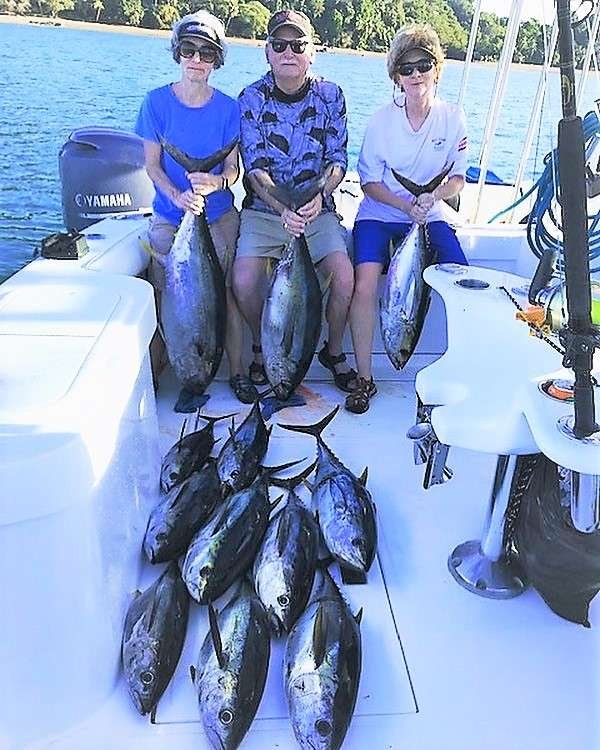
Costa Rica’s Pacific coast sits beside productive currents and deep offshore water that support baitfish, spinner dolphins and large schools of yellowfin tuna. Fish can appear surprisingly close to the coast or far offshore depending on current, bait and season.
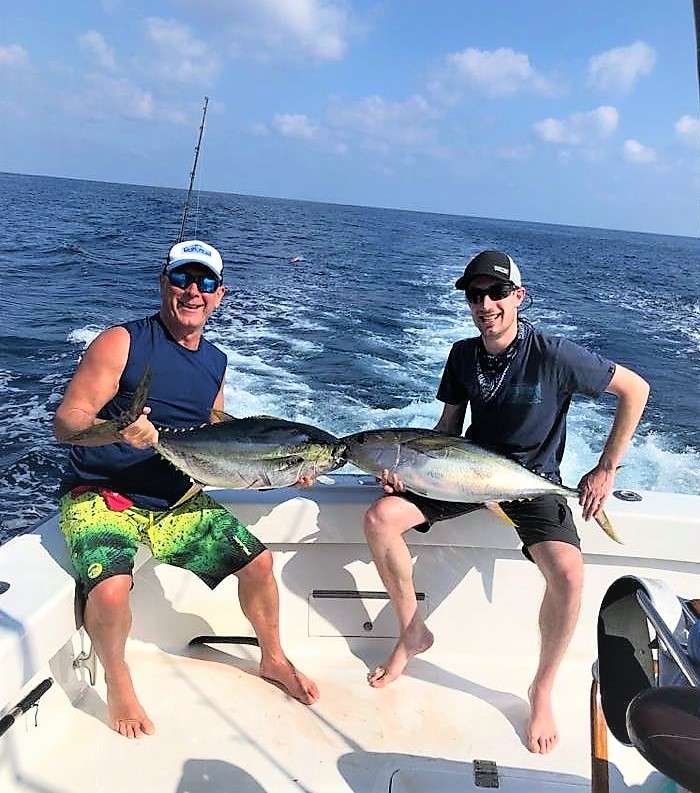
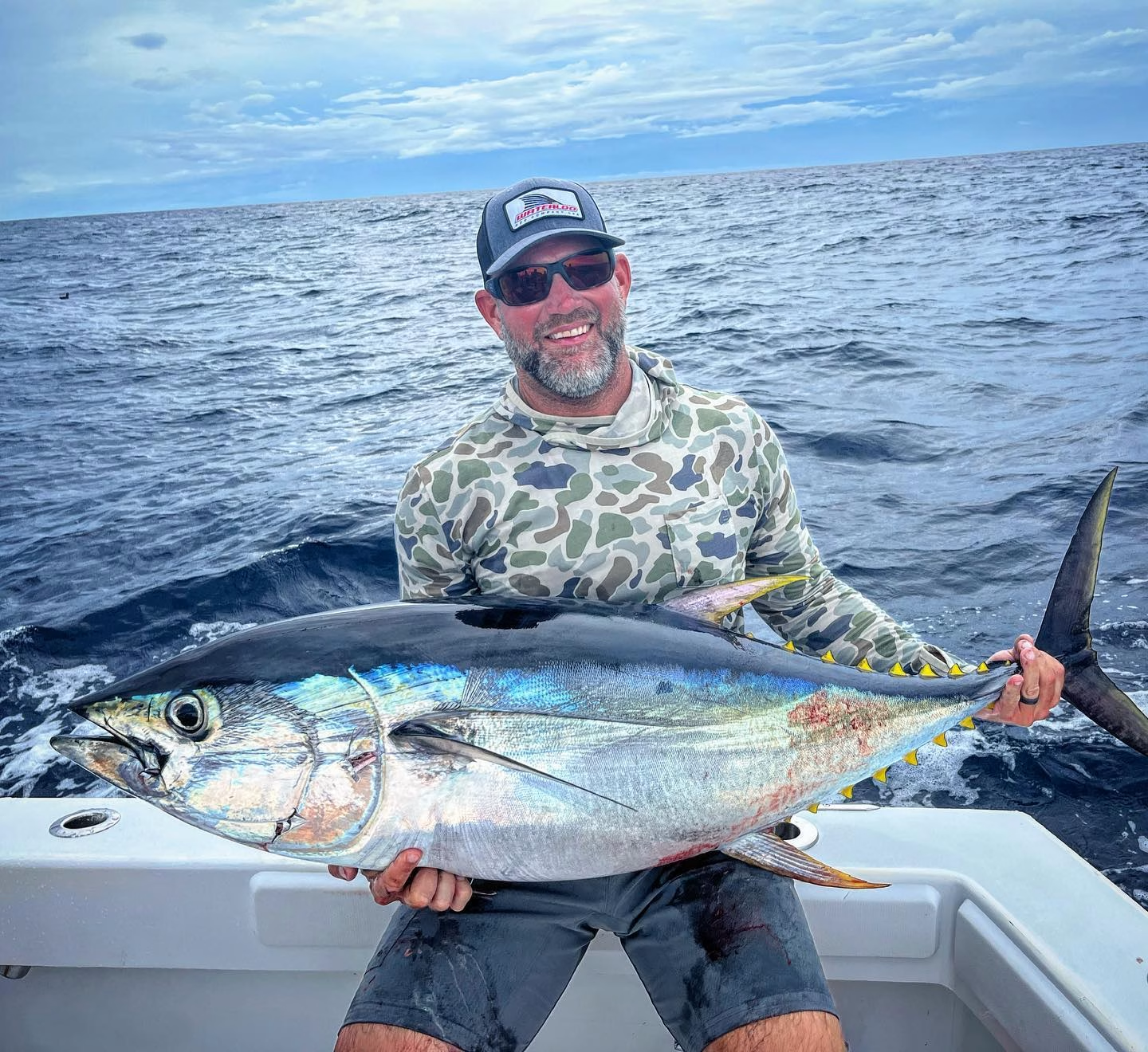
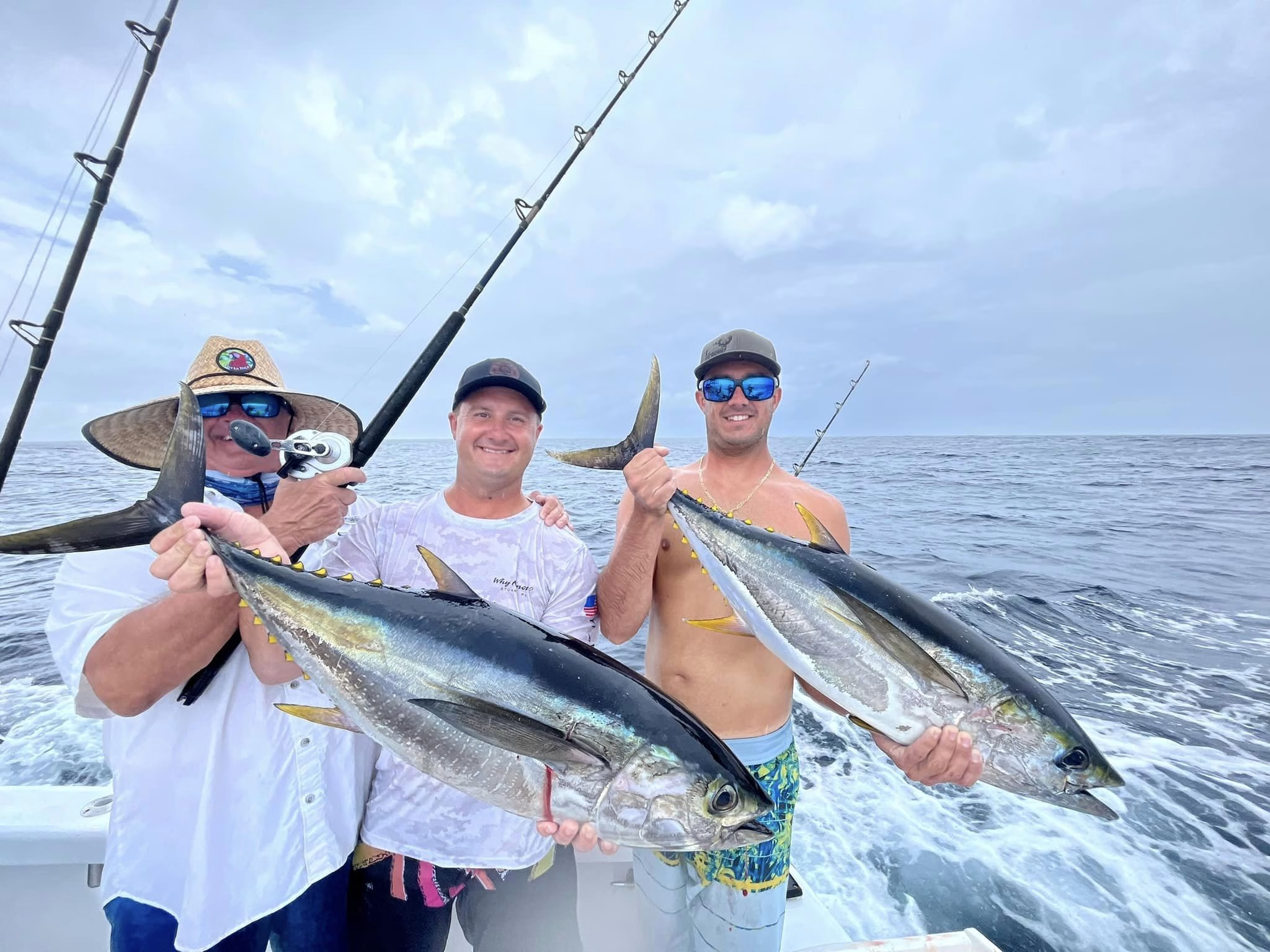
Yellowfin range from fast-moving school fish to heavy adults capable of long, punishing fights. Feeding fish may attack poppers and live bait at the surface or hold deeper where jigs and other presentations become effective.
Offshore behavior
Speed, endurance and surface explosions
Yellowfin follow bait, current and marine life, creating dynamic fishing that can change quickly during a charter.
Dolphin association
Pacific yellowfin commonly travel beneath spinner dolphins. Captains watch the dolphins and birds for signs of feeding tuna.
Relentless power
A hooked tuna uses speed, depth and strong circular runs to test the angler, tackle and boat crew.
Mixed offshore action
Sailfish, marlin, mahi-mahi and wahoo may be encountered while searching productive tuna water.
When to fish
Best time for Yellowfin Tuna in Costa Rica
Yellowfin tuna can be caught throughout the year along Costa Rica’s Pacific coast. Availability depends on bait, currents, water temperature and the movement of dolphin schools.
April through October is often the most consistent period, with November and December also capable of producing excellent fishing. Even during the dry-season sailfish months, tuna may appear whenever bait and dolphins are present.
Fishing techniques
How Yellowfin Tuna are caught
The crew selects techniques according to the depth of the fish, feeding behavior, bait and sea conditions.
Spinner Dolphins
Captains locate moving dolphin schools, feeding birds and bait activity that may signal tuna below.
Popper Casting
Large surface lures create explosive visual strikes when tuna are feeding near the top.
Vertical Jigging
Heavy jigs reach tuna holding below dolphins or bait when surface activity slows.
Live Bait
Live bait is presented around active schools when fish are focused on natural forage.
Trolling
Lures and rigged baits cover water while the crew searches for dolphins, birds and productive current.
Chunking
Small bait pieces can help hold feeding tuna near the boat and create multiple opportunities.
What to expect
A mobile offshore hunt
Tuna fishing often requires covering water and reading moving signs rather than returning to one fixed spot. The captain searches for dolphins, birds, bait, current edges and surface disturbances before positioning the boat.
Where to target Tuna
Best Costa Rica fishing regions
Yellowfin travel throughout Pacific waters, making the best departure area largely dependent on where you are staying.
Jacó & Los Sueños
Central Pacific charters search offshore dolphin schools, current lines and bait concentrations.
Los Sueños charters →Quepos
Marina Pez Vela provides access to productive offshore water near Manuel Antonio.
Quepos charters →Guanacaste
Flamingo, Tamarindo and Papagayo offer North Pacific tuna and mixed pelagic fishing.
Papagayo charters →Golfito & Osa
Southern Pacific departures from Golfito and the Osa Peninsula access remote tuna water.
Golfito charters →Giant Yellowfin
When school fish become true trophies
Large yellowfin are among the strongest fish encountered on a Costa Rica charter. They can stay deep, circle below the boat and turn a quick hookup into a demanding battle.
Trophy opportunities are never guaranteed, but appropriate boats carry the tackle, harnesses and experienced crews needed when a large fish appears. Tuna fishing also combines naturally with sailfish, marlin and mahi-mahi during a full offshore day.
Plan your charter
Let us match you with a Tuna-ready boat.
Send your fishing date, hotel or destination, number of anglers and target species. We’ll recommend practical departure areas and boats equipped for offshore tuna fishing.
Check Yellowfin Tuna availability
We’ll reply with suitable locations and available boats.
Before you fish
Yellowfin Tuna fishing FAQ
What is the best season for Yellowfin Tuna in Costa Rica?
Yellowfin are available year-round. April through October is generally the most consistent period, with November and December also capable of excellent fishing.
Why do captains look for spinner dolphins?
In the eastern tropical Pacific, yellowfin frequently travel beneath spinner dolphin schools. Dolphins, feeding birds and bait activity help captains locate productive water.
Is a full-day charter necessary?
A full day is strongly recommended because tuna schools move and may be located well offshore. Extra time gives the crew more flexibility to find them.
Can beginners catch Yellowfin Tuna?
Yes. School-size tuna are suitable for many anglers with coaching from the crew. Very large fish require stamina, proper technique and teamwork.
Can we keep Tuna to eat?
Legal yellowfin may normally be retained for the table. The crew can advise how much to keep, bleed and ice the fish, and clean the catch after the trip.
What other species might we catch?
Sailfish, marlin, mahi-mahi, wahoo and other offshore species may be encountered while searching for tuna.
Ready to chase Costa Rica Yellowfin Tuna?
Tell us where you are staying, and we’ll recommend the right offshore charter.
Check available boats →